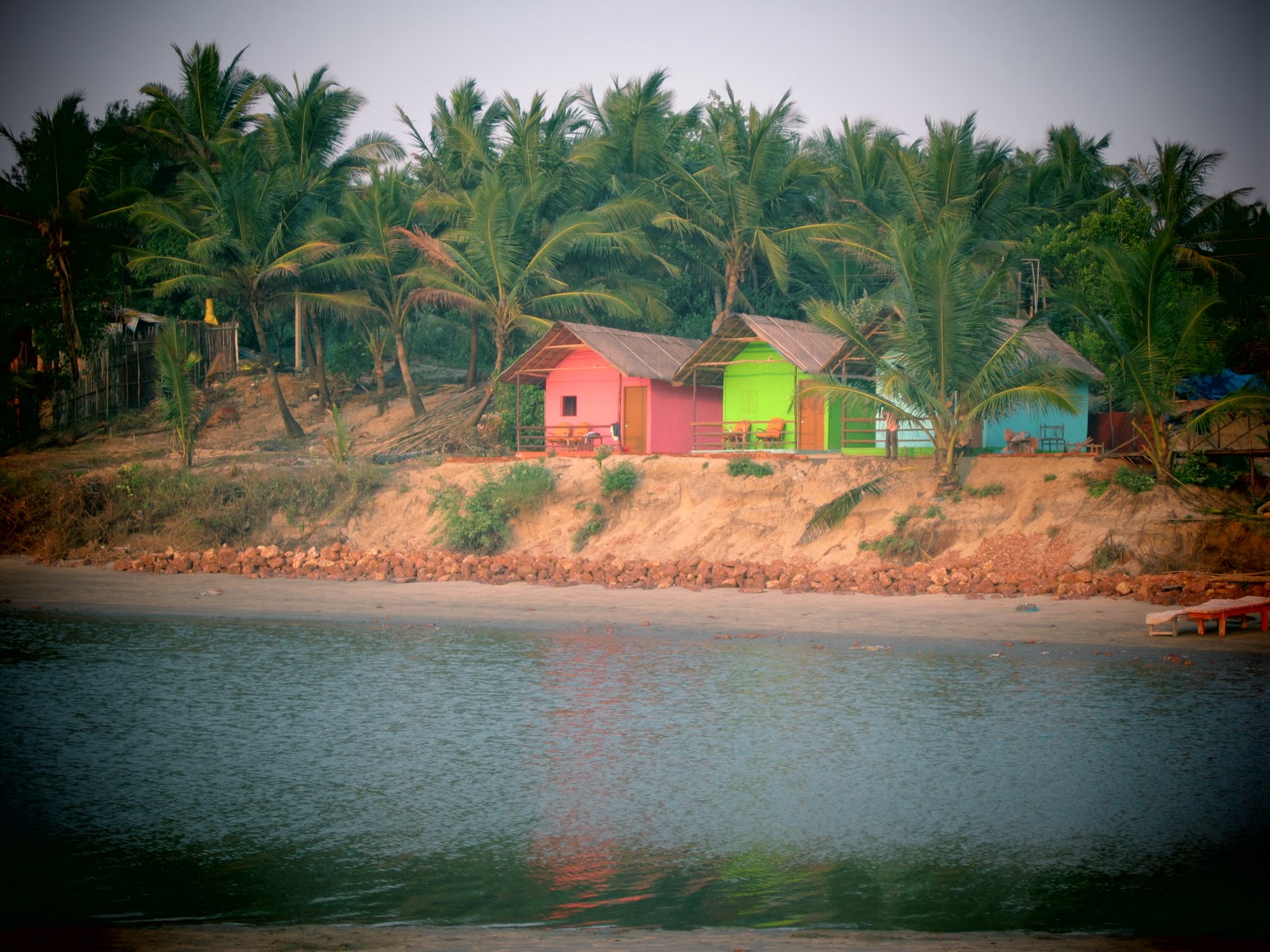
I just returned from an incredible journey through Western India. For Christmas and New Year's Eve, I traveled to Rajasthan and Gujarat to see the desert, a wedding and as many different beautiful cities as I could fit in. Here are some of the highlights!
Rajasthan is a wild place. It is one of the most popular tourist destinations for foreigners since it is a very flamboyant place with lots of colors, traditions that are centuries old and so much ornate and old architecture to see. Within a few hours of leaving the modern city of Delhi, you find yourself in the middle of a village surrounded by desert that is reminiscent of Arabia three hundred years ago. For all these reasons, along with ubiquitous bright-colored turbans and camels, a lot of people find themselves enchanted by Rajasthan. On the other side of the picture, it is also a state with high amount of poverty and intense developmental issues, including very poor infrastructure and an extremely high infant and maternal mortality rate.
 Udaipur was our first stop, a beautiful introduction to Rajasthan. We arrived on Christmas Day and toured around what is often referred to as the "City of Lakes" to witness stunning architecture of temples and the Udaipur Palace all pressed together within a sprawling maze of winding alleys and bridges. The history reminds you of the long legacy of wealth disparity in this region as you come across remnants of the royal family and stories of poor peasants that do not seem to far from today's reality for most of India. The trip also gave me a chance to spend Christmas day with another AIF Clinton Fellow Megan. The weather was much colder here than in Mumbai, which means we actually had to wear sweaters! This gave us more of the Christmas spirit than we felt back home in Mumbai. For the celebration, we had a huge dinner that included hot toddy masalas and a makeshift "masala chai pumpkin pie" from a pressure cooker with people from all over the world.


One of the highlights was camping out in the desert near the Pakistani border.
 After a looong 16 hour bus trip on one of the worst roads in India, we arrived in the Golden City of Jaisalmer where we almost immediately jumped aboard a car ride that took us all the way out to the middle of nowhere to find some camels to mount for the next two days. It was epic. The actual camel ride was less interesting since it really hurt my ass and there was not much authenticity (since no one really rides camels anymore long distances through deserts), but it was still fun to imagine myself in some Rajasthani caravan on a desert journey. The really amazing part though was the environment and the people. The land was so dry. As beautiful as it seemed, I could see how the peaceful open spaces could easily transform to desolate and scary isolation. Seeing the conditions of the villages and their landscape opened up my eyes to the realities of living in a deserted land with little hope for adequate water and food production. My crappy Hindi was really taking off around that time for some reason and somehow I managed to talk a lot with some of the guys that were taking us around. At first they gave me the impression that they were going to ask for money, which made me put my guard up. As the conversation went on though, I realized that they really just wanted to know more about the rest of India, and what they really wanted was to know how to make more opportunities for themselves. Their biggest desire was building a school for their kids.


It is hard to go so many places and hear so many needs of people - so many people that are continually ignored and geographically or socially disadvantaged. I recognize my own privilege of mobility, but it almost feels like a curse since you are exposed to so many problems with little to offer. The least I could do is listen, and hope that things work out. What I really wanted was to stay and build them a school, but all of my work with NGOs and in development have made me realize how hard this actually was. We made a fire and hung out in the rolling sand dunes, watching the sunset turn the sand a luminous ochre color until the light disappeared and gazillions of stars crept out from the black sky. We slept under the stars in the sand, covered in blankets as the desert cold crept in. The next day we visited a few villages, the homes of our guys and met some extremely jovial and exuberant kids that made me miss being a kid. Then we left. I don't know if I will, but I hope to go back.


We raced around Jaisalmer when we got back before catching a bus onward. Jaisalmer sits in a huge pile of sand, with most buildings made from golden sandstone, giving it a real interesting look and feel. It was so cold compared to Mumbai, but the city's charm enchanted us to stay out through the night. We rented motorcycles and even sampled local "Bhang" until we had to bid farwell to the Golden City as we headed onwards to Jodhpur, the Blue City.


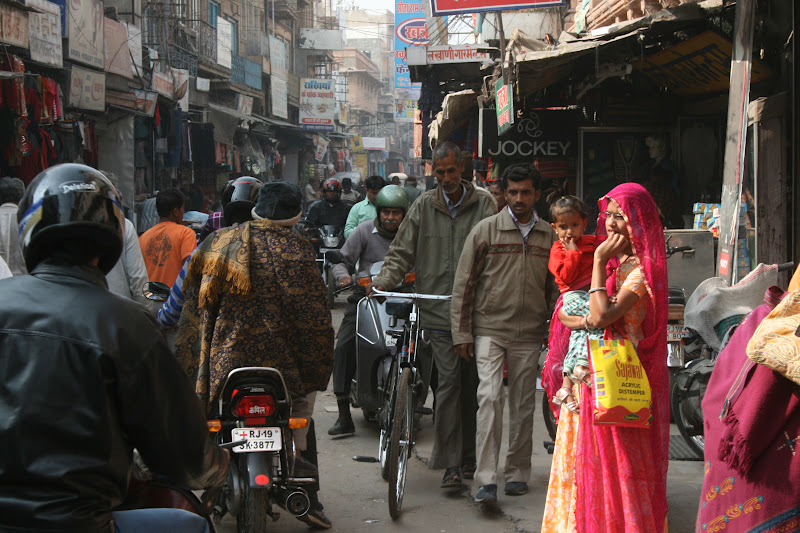
This place is one of the coolest cities I have been to in India just because of its random beauty. It was colorful, random and beautiful in a very crazy, polluted sort of way. So many things to check out! From gorgeous houses, forts and clocktowers, to crazy festivals with elephants and marigolds being dropped overhead from a helicopter! No joke! Rajasthani food was the best here and I need to get back since it was some of the spiciest I have had so far!



Opulence is how we ended the trip. After seeing some of the poorest people living on the edge of India near the Desert National Park, after some of the worst roads, after so many houses haphazardly stacked on top of one another -- we wound up in Gujarat where the roads are smooth and the housing societies are nicely planned and spaced for front yards. We headed to Baroda for a friend's wedding and it was an outrageous experience. From village parades, to drinking with 20 uncle Patels, to massive flower composed statues of peacocks and boats, it was full sensory experience. It was also one of the most beautiful and colorful things to witness, with a firework show better than most I have seen back home for the 4th of July. The pictures will have to do most of the talking for this $1 million wedding (check out my last blog post "Holidays in India" in addition to this one for more photos and stories on the experience).


 |
| Rajasthani Temples |
Rajasthan is a wild place. It is one of the most popular tourist destinations for foreigners since it is a very flamboyant place with lots of colors, traditions that are centuries old and so much ornate and old architecture to see. Within a few hours of leaving the modern city of Delhi, you find yourself in the middle of a village surrounded by desert that is reminiscent of Arabia three hundred years ago. For all these reasons, along with ubiquitous bright-colored turbans and camels, a lot of people find themselves enchanted by Rajasthan. On the other side of the picture, it is also a state with high amount of poverty and intense developmental issues, including very poor infrastructure and an extremely high infant and maternal mortality rate.
 |
| Jagdish Temple, Udaipur |
 |
| City of Lakes - Udaipur |
 Udaipur was our first stop, a beautiful introduction to Rajasthan. We arrived on Christmas Day and toured around what is often referred to as the "City of Lakes" to witness stunning architecture of temples and the Udaipur Palace all pressed together within a sprawling maze of winding alleys and bridges. The history reminds you of the long legacy of wealth disparity in this region as you come across remnants of the royal family and stories of poor peasants that do not seem to far from today's reality for most of India. The trip also gave me a chance to spend Christmas day with another AIF Clinton Fellow Megan. The weather was much colder here than in Mumbai, which means we actually had to wear sweaters! This gave us more of the Christmas spirit than we felt back home in Mumbai. For the celebration, we had a huge dinner that included hot toddy masalas and a makeshift "masala chai pumpkin pie" from a pressure cooker with people from all over the world.


 |


 |
| Auto Ride through the City in Udaipur |
 |
| Christmas Party! |
 |
| Jaisalmer |
 |
| Camel Ride to the Dunes! |
 After a looong 16 hour bus trip on one of the worst roads in India, we arrived in the Golden City of Jaisalmer where we almost immediately jumped aboard a car ride that took us all the way out to the middle of nowhere to find some camels to mount for the next two days. It was epic. The actual camel ride was less interesting since it really hurt my ass and there was not much authenticity (since no one really rides camels anymore long distances through deserts), but it was still fun to imagine myself in some Rajasthani caravan on a desert journey. The really amazing part though was the environment and the people. The land was so dry. As beautiful as it seemed, I could see how the peaceful open spaces could easily transform to desolate and scary isolation. Seeing the conditions of the villages and their landscape opened up my eyes to the realities of living in a deserted land with little hope for adequate water and food production. My crappy Hindi was really taking off around that time for some reason and somehow I managed to talk a lot with some of the guys that were taking us around. At first they gave me the impression that they were going to ask for money, which made me put my guard up. As the conversation went on though, I realized that they really just wanted to know more about the rest of India, and what they really wanted was to know how to make more opportunities for themselves. Their biggest desire was building a school for their kids.


It is hard to go so many places and hear so many needs of people - so many people that are continually ignored and geographically or socially disadvantaged. I recognize my own privilege of mobility, but it almost feels like a curse since you are exposed to so many problems with little to offer. The least I could do is listen, and hope that things work out. What I really wanted was to stay and build them a school, but all of my work with NGOs and in development have made me realize how hard this actually was. We made a fire and hung out in the rolling sand dunes, watching the sunset turn the sand a luminous ochre color until the light disappeared and gazillions of stars crept out from the black sky. We slept under the stars in the sand, covered in blankets as the desert cold crept in. The next day we visited a few villages, the homes of our guys and met some extremely jovial and exuberant kids that made me miss being a kid. Then we left. I don't know if I will, but I hope to go back.


We raced around Jaisalmer when we got back before catching a bus onward. Jaisalmer sits in a huge pile of sand, with most buildings made from golden sandstone, giving it a real interesting look and feel. It was so cold compared to Mumbai, but the city's charm enchanted us to stay out through the night. We rented motorcycles and even sampled local "Bhang" until we had to bid farwell to the Golden City as we headed onwards to Jodhpur, the Blue City.

 |
| Motorcycle rides through the fort! |
 |
| Temple Roofs inside the Fort |

 |
| A Glimpse of the Real City Outside the Fort |
 |
| Jaisalmer Fort by Night |
 |
| Rooftop Breakfast in Jodhpur |
 |
| Jaswant Thada Mausoleum |

 |
| Bangles |

 |
| Marigolds being dropped overhead by a helicopter |


 |
| Jodhpur - The Blue City |
 |
| Me - never blending in - at the Wedding outside of Baroda |
 |
| The Procession for the Groom in the Village |


 |
| Dancing the Night Away |
 |
 |
| Entrance to the Wedding, Final Day of Celebration |
 |
| Amazed! |

Chalo, now back to work! Happy Friday the 13th!